
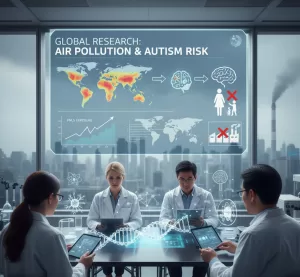
London, UK – A growing body of international research is pointing towards a concerning connection between prenatal and early childhood exposure to air pollution and an increased risk of developing Autism Spectrum Disorder (ASD). Recent meta-analyses, combining data from studies across multiple continents, indicate that exposure to fine particulate matter (PM2.5) and other air pollutants may disrupt neurodevelopmental processes, contributing to a higher incidence of autism diagnoses.
Scientists from institutions including King’s College London and Harvard T.H. Chan School of Public Health have been at the forefront of this research. Their findings suggest that the developing brain is particularly vulnerable to environmental stressors, and air pollution, with its complex mixture of toxic substances, could act as a significant neurodevelopmental risk factor. While genetics play a substantial role in autism, these studies underscore the importance of environmental factors in the complex etiology of ASD.
Public health organizations globally are taking note, advocating for stronger environmental policies to reduce air pollution, especially in urban areas and near industrial zones. The implications of this research extend beyond autism, prompting calls for comprehensive strategies to protect maternal and child health from environmental hazards. These efforts aim to create healthier environments that support optimal neurodevelopment for all children worldwide.