
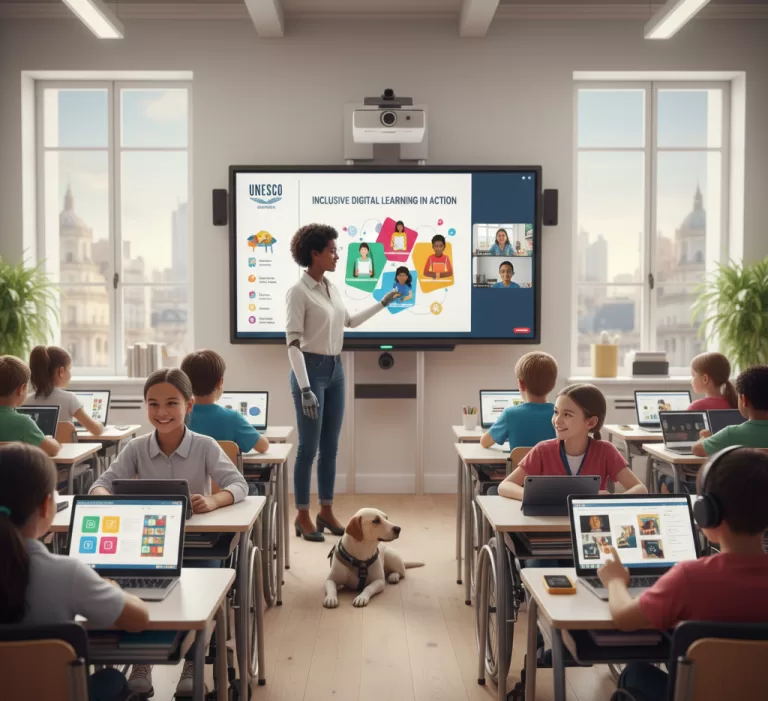
Paris, France – A recent groundbreaking report from the United Nations Educational, Scientific and Cultural Organization (UNESCO) has sounded an alarm regarding the persistent exclusion of millions of children with disabilities from quality education globally. The report, part of UNESCO’s ongoing efforts to monitor progress towards Sustainable Development Goal 4 (SDG 4) – ensuring inclusive and equitable quality education for all – emphasizes that the COVID-19 pandemic further exacerbated existing inequalities, particularly for learners with disabilities.
The findings highlight that despite international commitments, children with disabilities are significantly more likely to be out of school or to face severe barriers within mainstream education systems. These barriers include inaccessible infrastructure, a lack of trained teachers, inappropriate curricula, and prevalent discriminatory attitudes.
A key recommendation from the report is the urgent need to leverage digital learning technologies to bridge educational gaps for students with disabilities. It calls for governments and educational institutions to invest in accessible digital platforms, adaptive tools, and specialized training for educators to effectively utilize these resources. The report stresses that inclusive education is not merely about attendance, but about meaningful participation and learning outcomes, ensuring that every child, regardless of ability, has the opportunity to fulfill their potential.